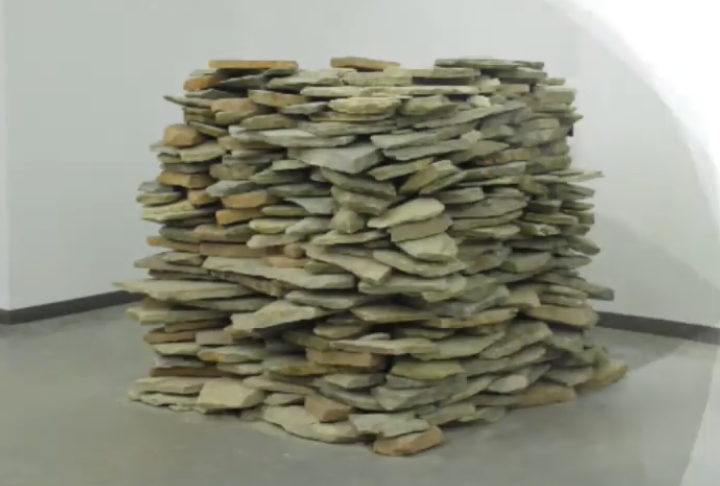
Two stone well structures (first titled People Portals for Telematic Exchange, with the first prototype completed in 2009), installed in different locations and connected by cameras and the internet. When you looked into one well, you saw the faces of the people gathered at the other.
Each well is built from over one ton of natural rock. Inside each well sits a custom wooden cube holding a thin clear acrylic container with seven inches of water. Beneath the acrylic, facing up through the well, is a standard computer monitor and webcam wired into a Mac mini embedded in the wooden cube, running a Max/MSP Jitter patch that creates a live web stream across the local network.
Strangers wrote notes and held them above the water. They played rock-paper-scissors. They swirled the water to distort the images. All smiles. It felt like looking through the center of the earth at another human being.
The work drew on a telematic tradition stretching back to Moholy-Nagy's Telephone Pictures in 1922 and Roy Ascott's networked Terminal Art in 1980—and it won Warren a Fulbright Fellowship, carrying the project and the practice to New Zealand. Years later, Amar Bakshi launched Portals, an almost identical concept: the first Portal opened in December 2014, connecting New York and Tehran through gold shipping containers, and expanded to dozens of cities. The wishing wells were built first, from stones and water, in a university art program.
Technology as connection.